

Executive functioning is something we rely on every day. It helps us plan, organize, manage our time, remember things, get started on tasks, and follow through with what needs to be done. For people with ADHD, these tasks can require considerably more effort. And for many women, perimenopause and menopause can bring changes in memory, concentration, mental clarity, and the ability to manage everyday demands. Sometimes, the strategies that used to work just don't seem to work anymore.
The good news is that supporting executive function doesn't always mean trying harder, becoming more disciplined, or finding a better organizational system. Sometimes, it means finding ways to make everyday tasks require less mental effort.
One approach is to introduce practical supports into your environment. These tools aren't cures for ADHD or solutions to hormonal changes. They are simply ways to make daily life a little more manageable, alongside other supports such as therapy, medical care, medication when appropriate, lifestyle adjustments, and self-compassion.
A Gentle Reminder: You Don't Have to Use Any or All of These Tools
One thing I want to emphasize is that these tools aren't another list of things you need to do. You don't need to buy every product, reorganize your entire home, or create a complicated new system. I recognize setting up a new support takes executive functioning to do! Not to mention extra time and money.
In fact, introducing too many new strategies at once can sometimes create more overwhelm. Instead, think about one small area of your day that consistently feels difficult and see if you can help reduce the friction a bit in that area. Is it getting out the door in the morning? Remembering appointments? Starting household tasks? Staying focused during meetings?
Choose one area and consider whether a simple external support might help. Experiment with it. See whether it makes a difference. Adapt it to your needs. And if something doesn't work for you, that's okay. It doesn't mean you've failed. It simply means that particular tool wasn't the right fit.
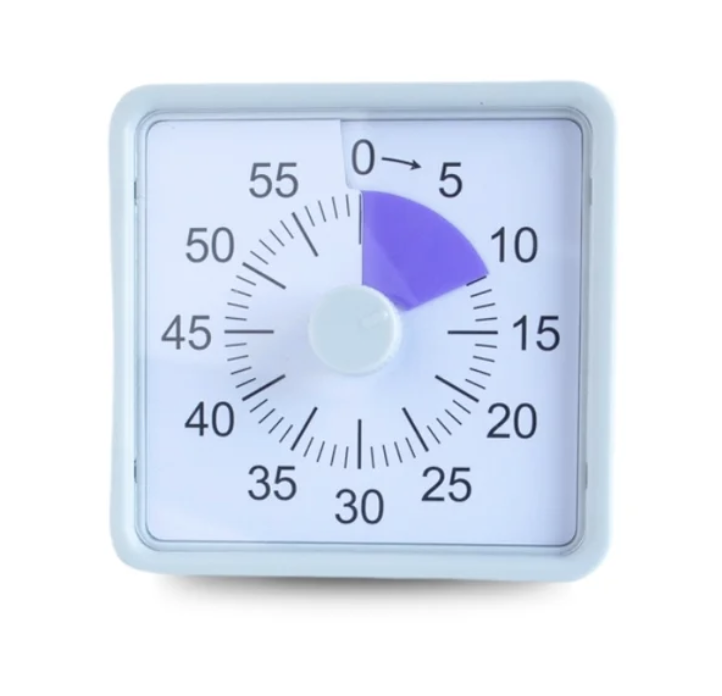
1. Visual Timers: Making Time Easier to See
For people with ADHD, time can sometimes feel difficult to estimate or manage, this is called time blindness. During perimenopause and menopause, changes in concentration, sleep, and mental clarity can also make it harder to stay on track. A visual timer can help make time more concrete.
Unlike a traditional clock, a visual timer shows the passage of time through a disappearing coloured section or other visual display. You can actually see how much time remains.
One helpful strategy is to take the pressure off finishing a task altogether.
Instead of telling yourself, "I need to clean the entire kitchen," try setting a timer for 10 minutes and simply working on the kitchen for that amount of time.
When the timer goes off, you can decide whether to continue or stop.
This can be particularly helpful when:
-
You're struggling to get started on a task.
-
You feel overwhelmed by how much needs to be done.
-
You tend to lose track of time.
-
You find it difficult to transition between activities.
The goal isn't to become more productive every minute of the day. It's to make getting started feel a little less overwhelming.
2. Visual To-Do Lists: Breaking Tasks Into Smaller Steps
Sometimes tasks that feel like they should be simple are actually made up of 6-12 discrete steps.
A task like doing laundry, preparing for the week, or cleaning the house can feel like one enormous job. Being able to put the steps into an efficient order can simply be out of reach, meaning the task could take a lot more effort.
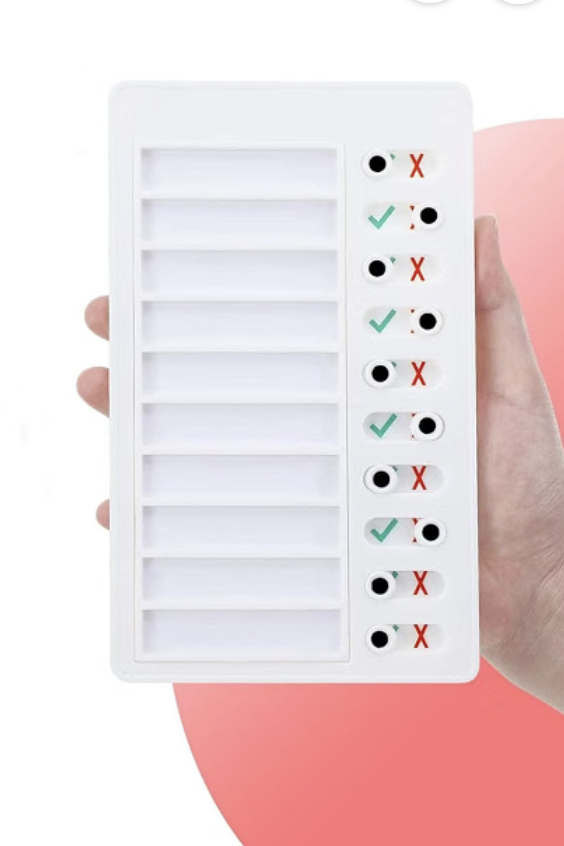
A visual to-do list can help break repetitive or overwhelming tasks into smaller, manageable steps. For example, instead of writing "Clean the kitchen," you might create a list that includes:
- Empty dishwasher
- Put food away.
-
Put dirty dishes in the dishwasher.
-
Wipe down the counters.
-
Sweep the floor.
Tools such as sliding to-do lists, where you move a marker or check off each completed step, can make progress visible. There's also something satisfying about physically moving a task from incomplete to complete.
Keeping the list somewhere visible and near where that job occurs. This gives a visual reminder of what comes next, rather than requiring you to remember every step. Remember, the purpose of a list is to reduce what your brain needs to hold onto, not to create another set of expectations you have to meet.
3. Visual Reminders: Let Your Environment Remember for You
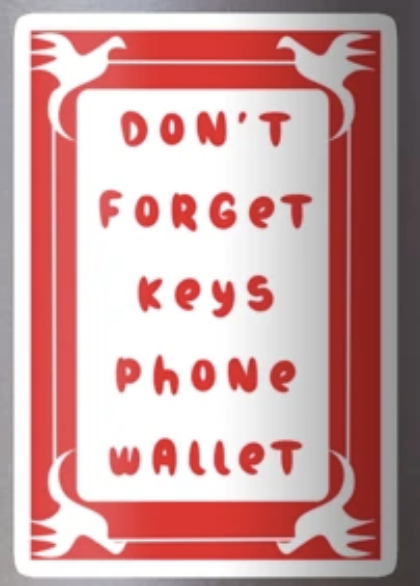
How many times have you left the house only to realize you've forgotten something important? Your phone. Your keys. Your wallet.
A simple visual reminder placed near your door can make a surprising difference. For example, a small sticker showing a phone, keys, and wallet can prompt you to check that you have everything before leaving. This is an example of an external cue. Instead of relying entirely on your working memory, you're creating a reminder in the exact place where you need it.
The same idea can be applied throughout your home.
You might:
-
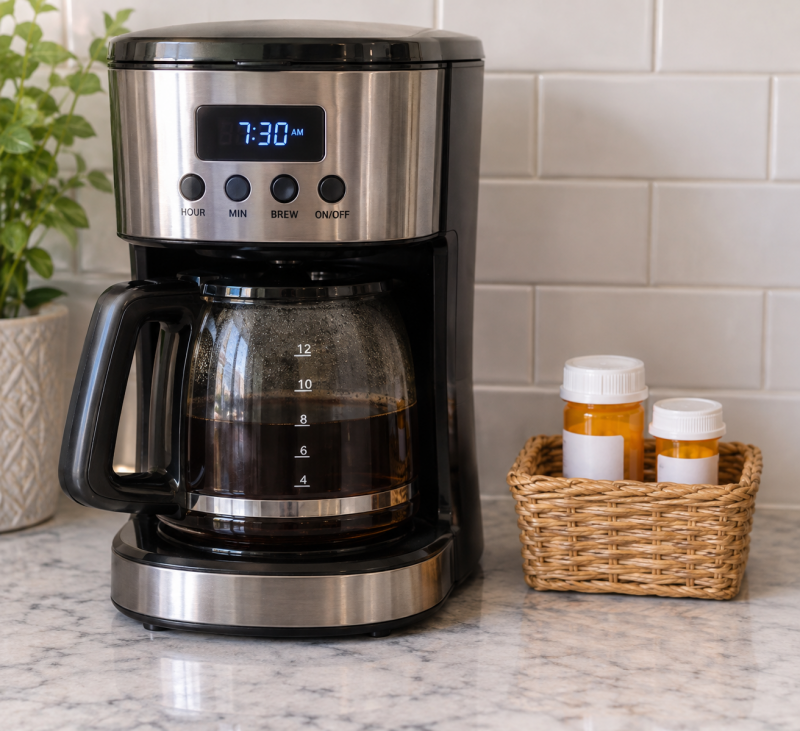
Keep medication beside something you use every morning: like a little basket next to your coffee maker.
-
Place a reminder on the bathroom mirror. Post its work great.
-
Keep a reusable shopping bag near the door. Socks in a basket by your shoes.
-
Put important items in a designated, visible location.
- For anything you look for often, buy multiples. Small items like scissors, hairbrushes, tape. Instead of buying 1 buy 3 or 6, and keep them around your home.
The idea is to make the environment work with you rather than expecting yourself to remember everything independently.
4. Trackers: Less Time Searching for Lost Things
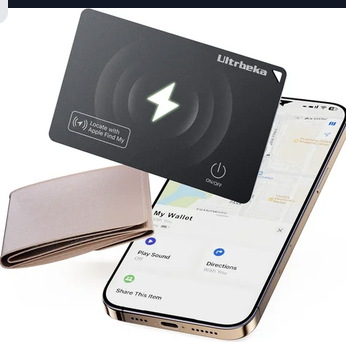
If losing your keys, wallet, or purse is a regular occurrence, a tracking device might be worth considering. Products such as Apple AirTags and Tile trackers can be attached to keys, placed in a wallet, or kept in a purse. Apple AirTags are great for apple users where as Tile trackers are android friendly.
When something goes missing, you can use your phone to help locate it. Depending on the device, you may also be able to make the tracker play a sound. This doesn't necessarily prevent things from getting lost, but it can reduce the time, frustration, and stress involved in finding them.
For someone who already feels overwhelmed by daily demands, reducing these small but frequent stressors can make a meaningful difference.Sometimes, support isn't about preventing every difficulty. It's about making the difficult moments a little easier to navigate.

5. Fidgets and Movement Supports: Helping Your Body Focus

Executive functioning isn't only about planning and remembering. It can also involve managing attention, restlessness, and the need for movement in order to get stationary tasks done. Some people find it easier to concentrate when their bodies have something to do.
Fidgets and movement-based seating can provide an additional sensory or movement outlet while working, attending meetings, or completing tasks.
Some options include:
-
Chair bands: Elastic bands attached to chair legs that allow you to move your feet while sitting.
-
Yoga ball chairs: An alternative seating option that allows for movement while working. You can buy affordable options or more upscale options.
-
Fidget rings: Discreet items that can be moved or manipulated with your fingers.
-
Leather or tactile fidgets: Small objects that provide something to touch or manipulate.
-
Sticker fidgets: Textured or tactile stickers that can be used discreetly.
These supports aren't just for children. Adults can benefit from having options that allow for movement and sensory input throughout the day.
You might find that having something to fidget with during a meeting helps you listen, or that being able to move your feet makes sitting through a task more manageable. Everyone is different, so it's worth experimenting to see what feels helpful rather than distracting.
6. Body Doubling: Sometimes We Work Better Together
Body doubling is a strategy where another person is present while you work on a task. They don't necessarily need to help you, give you instructions, or even be working on the same thing. Simply having someone sit or be nearby can sometimes make it easier to get started, stay focused, and follow through. Best part, it doesn't cost a thing.
For people with ADHD, body doubling can be a helpful way to support task initiation and attention.
There are lots of ways to try body doubling:
-
Ask a friend to come over while you tackle household tasks.
-
Arrange a regular work session with a colleague.
-
Sit alongside a partner while you each work on your own tasks.
-
Join a virtual body doubling session online.
-
Use an online service or community that offers scheduled co-working sessions.
You don't need someone to supervise you or keep you accountable. The goal is simply to create a supportive environment where getting started feels a little easier. And remember, this isn't about being unable to do things independently. Sometimes having another person alongside us is exactly the kind of support that helps us get things done.
7. Big Calendars: Getting Your Schedule Out of Your Head
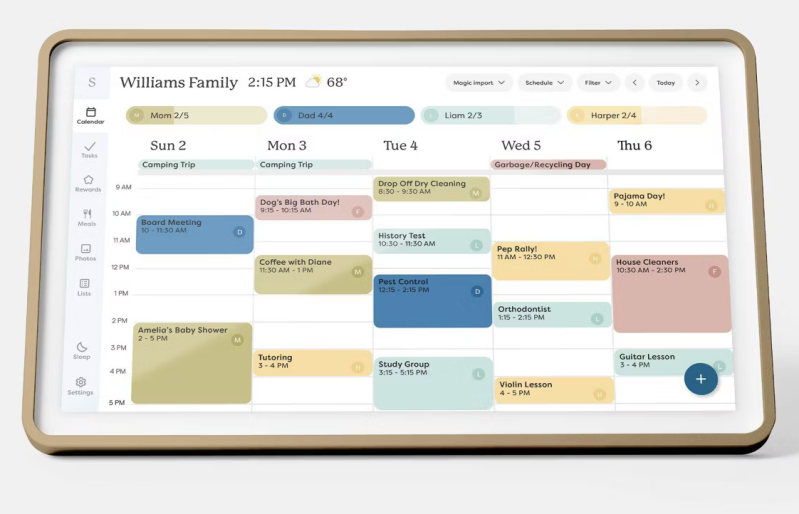
Keeping track of appointments, activities, deadlines, school events, work commitments, and family responsibilities can take up a tremendous amount of mental energy. If you use a digital calendar on your phone, a digital calendar in your home can help make this information visible in your home.
One option is a physical digital calendar, such as the Skylight Calendar, which connects with the calendar on your phone. It provides a visible overview of your schedule without requiring you to open an app or remember to check your phone.
Placing a calendar somewhere you naturally look every day, such as near the kitchen or coffee maker, can help make your schedule part of your everyday routine.
This can be particularly useful if you:
-
Frequently forget appointments or commitments.
-
Struggle to keep track of family schedules.
-
Find it difficult to plan ahead.
-
Feel overwhelmed trying to remember everything that's coming up for everyone else in your family.
Why These Tools Can Be Helpful During Perimenopause and Menopause
We often talk about executive functioning in relation to ADHD, but it's important to recognize that these challenges aren't exclusive to ADHD. During perimenopause and menopause, many women notice changes in concentration, memory, mental clarity, and their ability to manage multiple demands.
You might find yourself struggling to remember things that once felt automatic, having difficulty organizing your day, or feeling overwhelmed by tasks you previously managed without much thought. These changes can be frustrating, particularly if you've always been someone who felt organized and capable. It's also worth remembering that hormonal changes don't happen in isolation. Sleep disruption, stress, caregiving responsibilities, work demands, and other life pressures can all contribute to feeling mentally stretched.
For women who already have ADHD, this stage of life can bring additional challenges. Strategies that once helped compensate for executive functioning difficulties may no longer feel sufficient. This doesn't mean you've suddenly become less capable. It may mean that your brain and body need different kinds of support right now.
External tools can help reduce the amount of information you're trying to hold in your head, make tasks more manageable, and create a little more breathing room in your day.
If changes in memory, concentration, or mental clarity are new or concerning, it's also worth discussing them with a healthcare provider. Practical tools can be helpful, but they don't replace an assessment of what's contributing to those changes.
Support Is About More Than Trying Harder
Whether you're navigating ADHD, perimenopause, menopause, or a combination of these experiences, it's important to remember that struggling with executive functioning isn't a character flaw.
You don't need to become more disciplined, more organized, or better at pushing through. Sometimes, the most helpful thing you can do is stop expecting your brain to manage everything internally and start creating supports around you.
These practical tools are just one part of a broader approach to supporting your mental health and everyday functioning.
Therapy can also provide a space to explore why certain tasks feel difficult, understand patterns of overwhelm, work through self-criticism, and develop strategies that fit your actual life.
The goal isn't to create a perfectly organized life. It's to make everyday life feel a little more manageable, with less frustration, less self-blame, and more room for the things that matter to you.
You deserve support, not just more expectations of yourself.
Disclaimer: I do not represent any of these products listed, nor do I receive any commission on the sale of these products. Products are linked simply to make accessing them a little easier. Please do your own research on product purchases.